Stockholm's Summer Streets 2026: The Champions
This post is written by Irena Toljan, who covers Stockholm’s public spaces on her newsletter The Third Place, where this piece was first published. It is part two of her summer streets series — part one, on why the summer streets exist at all, is already up here.
Stockholm’s sommargågator are a mixed bag of wins and missed opportunities, but these 10 prove that pedestrian-first design can transform a city. Let’s start at the bottom and work our way up to the undisputed champion.
#10: Jakobsgatan – The Glorified Sidewalk
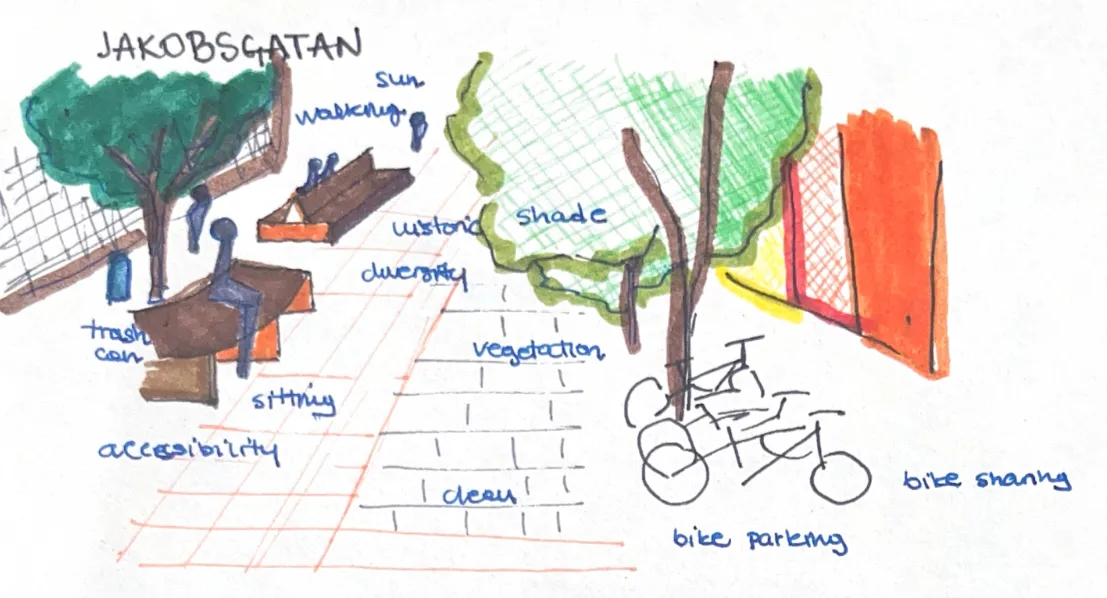
A nice green oasis near Kungsträdgården with bike parking and bike-share options. But: Not car-free, no restaurants, and bad air quality.
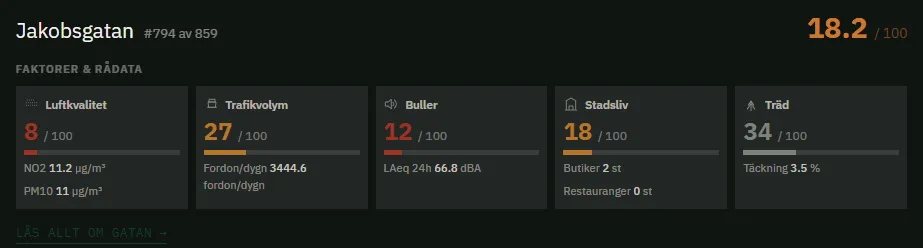
Statistics from Gatuligan
It’s a glorified sidewalk, a solid start, but not a proper sommargågata yet.
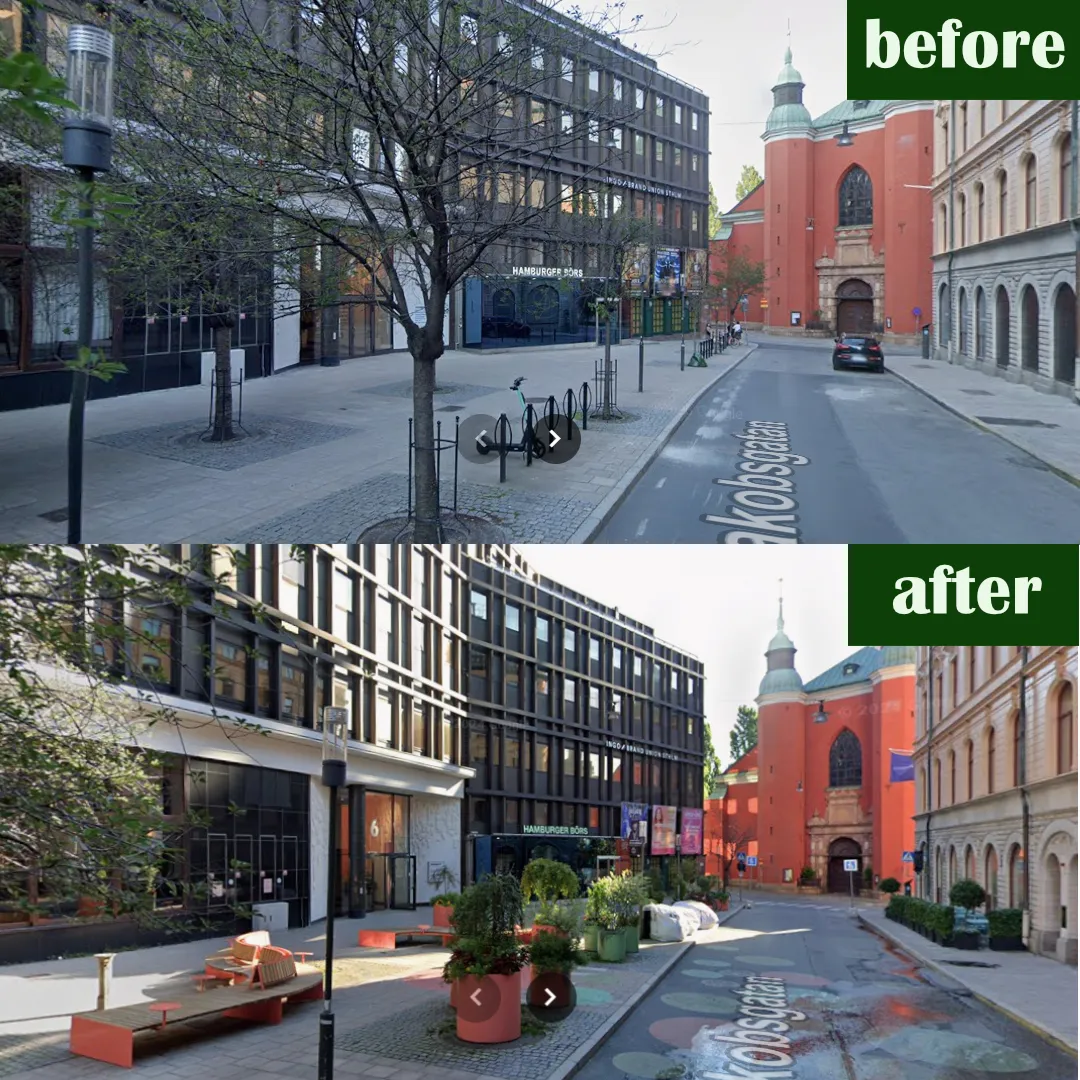
Before and after on Jakobsgatan
#9: Skeppsbron – The Waterfront Work in Progress
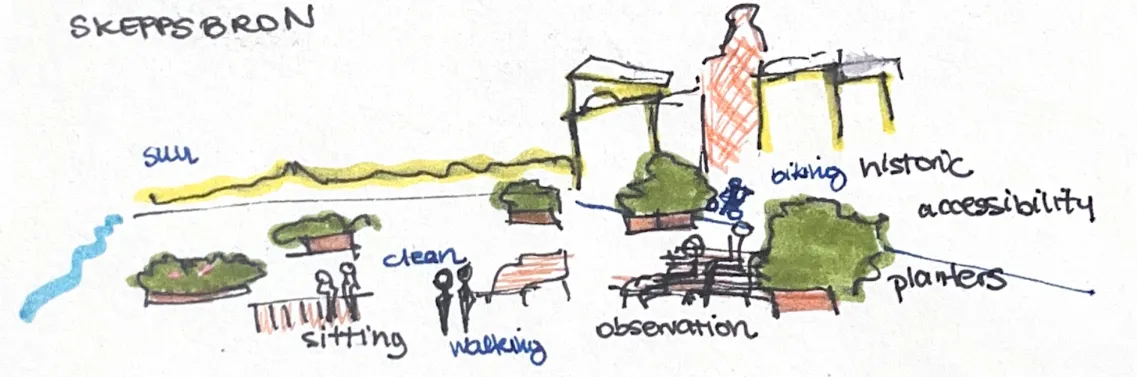
Transformed from parking lots to seating, plants, and hammocks. A welcoming space by the water with cafés and boat transit. But too many cars are still driving through. Next year, ditch the parking spots entirely and let this waterfront shine. Also, the public toilet in the area is temporarily closed.
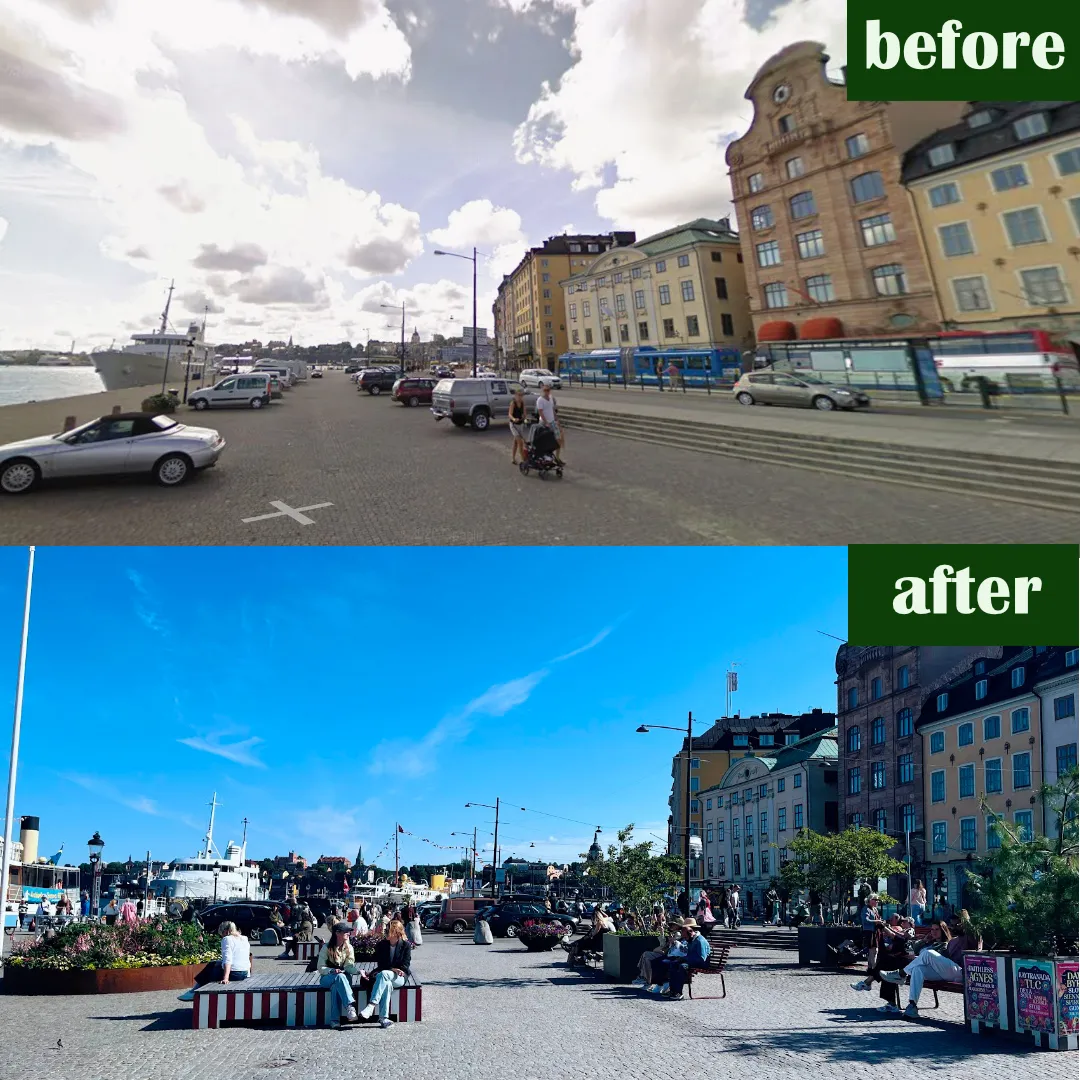
Before and after of Skeppsbron
#8: Munkbrohamnen – The Beach Wildcard
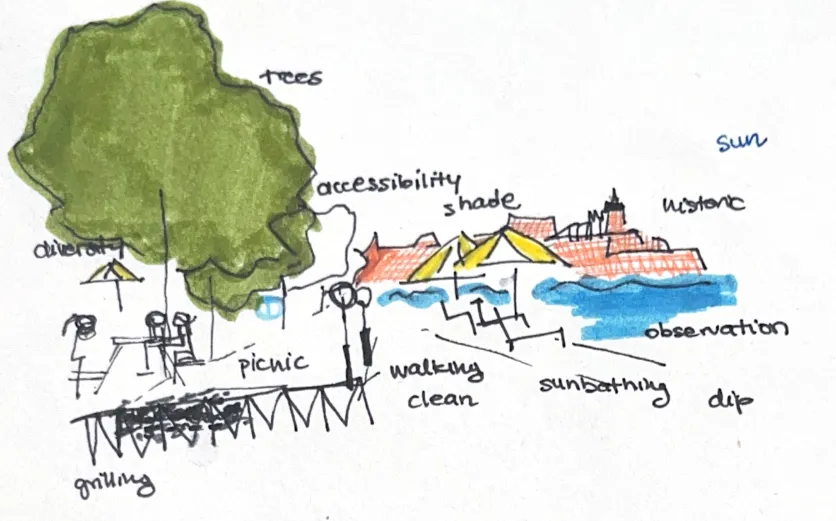
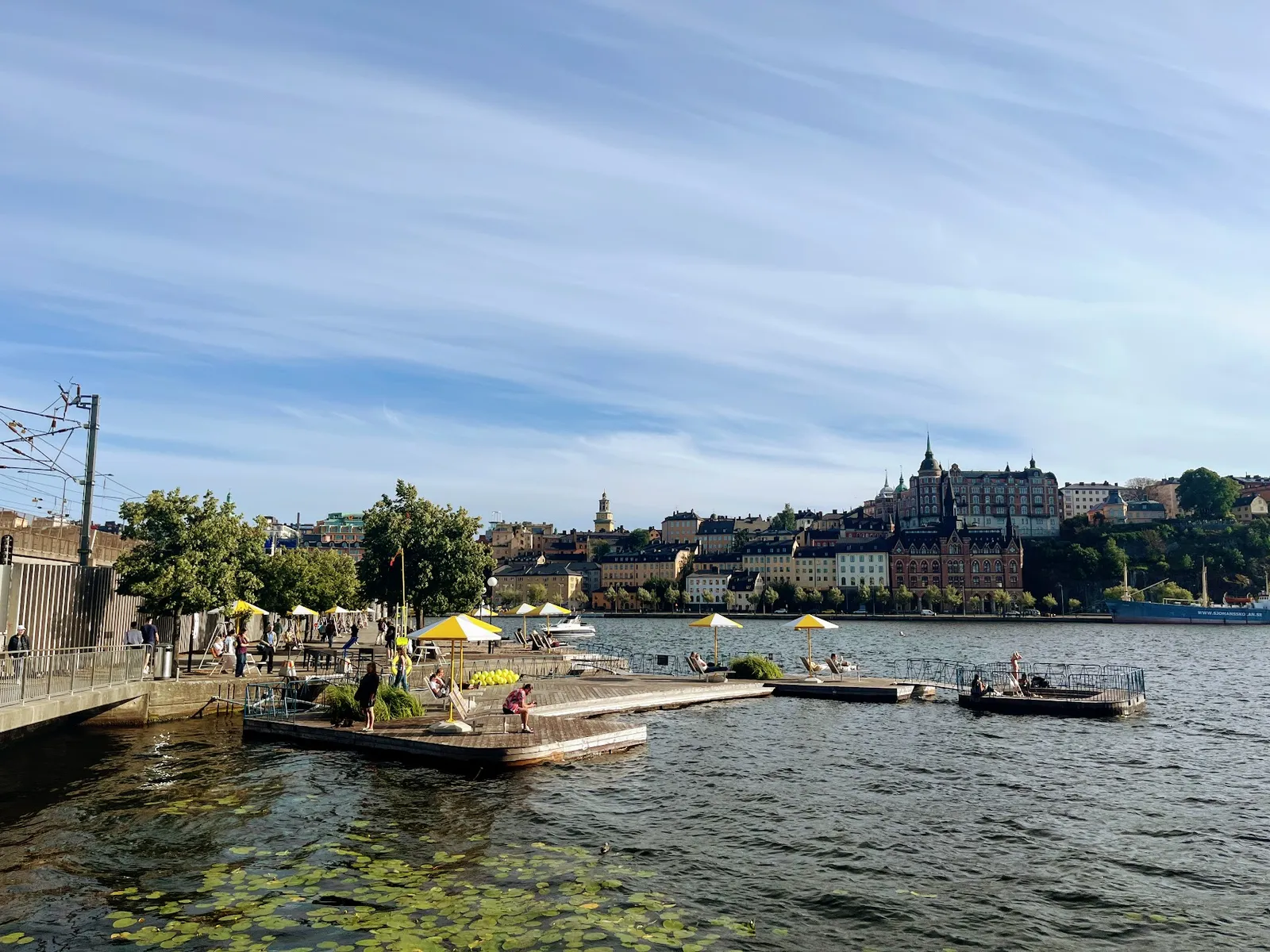
Not a street, but a public beach with a skyline view. You can grill, sunbathe, and dip (not swim).
Downside: The water isn’t clean this year, but it’s still a fantastic spot to meet friends. In fact, Munkbrohamnen was among the top three finalists for Årets Stockholmsbyggnad 2025.⁶
#7: Hornsbergs Strand – The Waterfront Escape
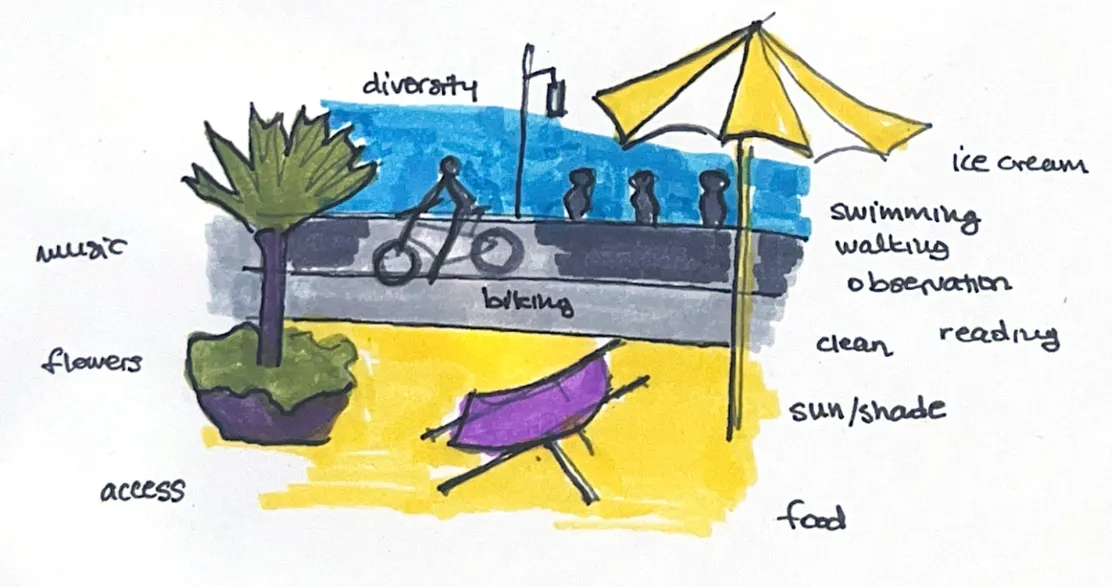
98% of visitors rate it positively⁹, but only 46% feel safe walking⁹ (thanks, cars).
Why it’s great: Beautiful views, swimming spots, salsa parties, and ice cream stands.
But: No functioning public toilet (a recurring Stockholm tragedy) and a wasted grass patch that could host a market or events.
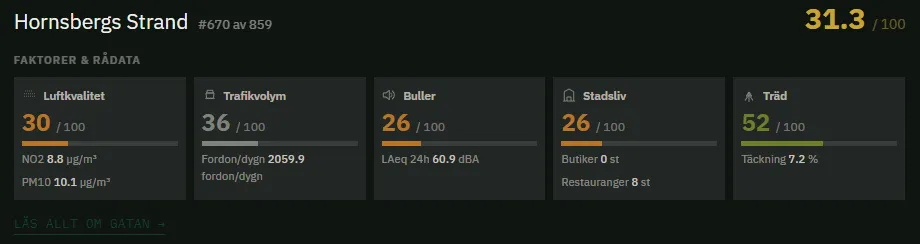
Statistics from Gatuligan
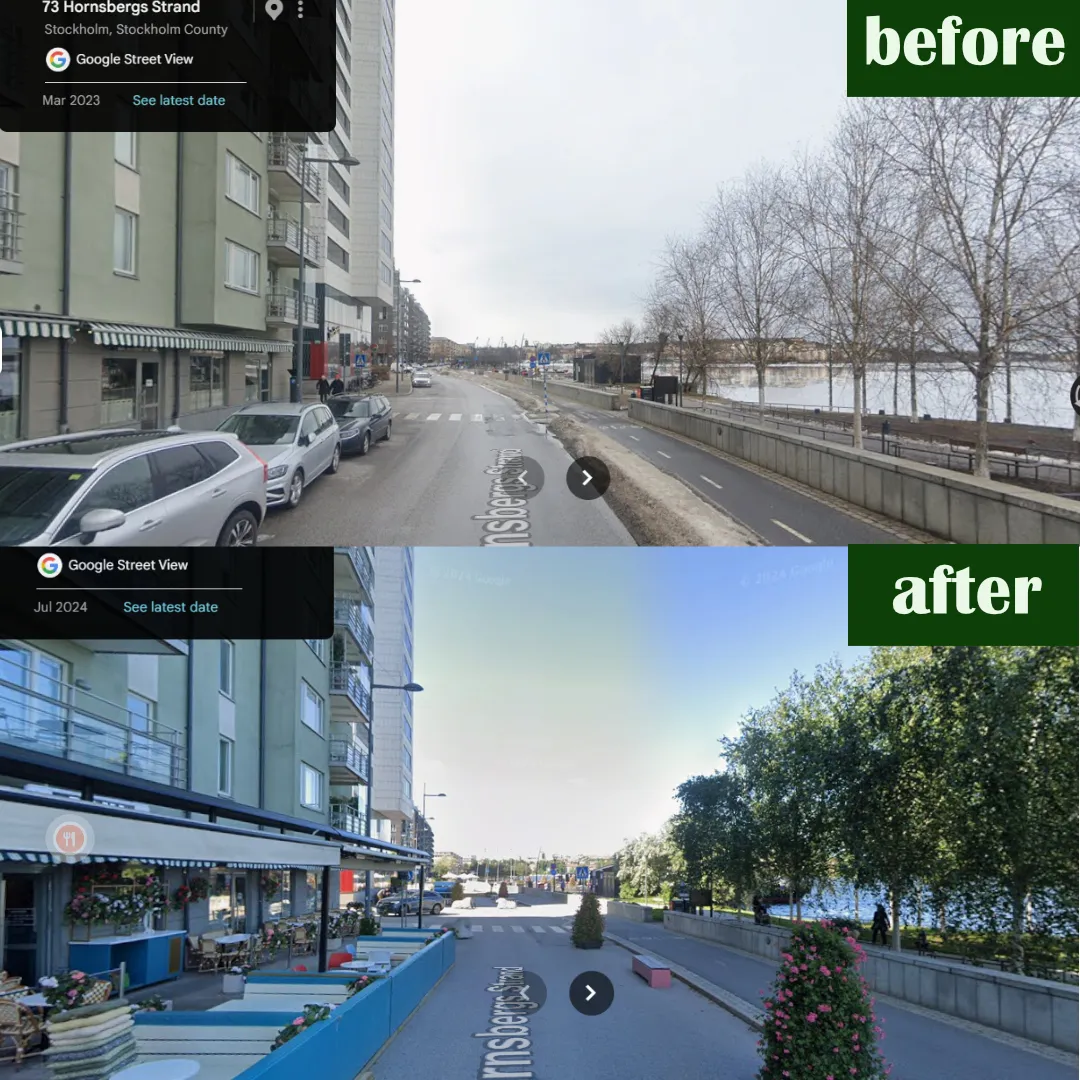
Before and after of Hornsbergs strand
#6: Hornsgatan – The New Kid on the Block
Stockholm moved car-free weekends from Sveavägen to Hornsgatan this year. Early impressions? Quite successful. The catch: When it’s not pedestrianized, the air quality, traffic, and noise are awful, proving this street needs to be car-free more often. The city also doesn’t support ideas from local businesses as it should.
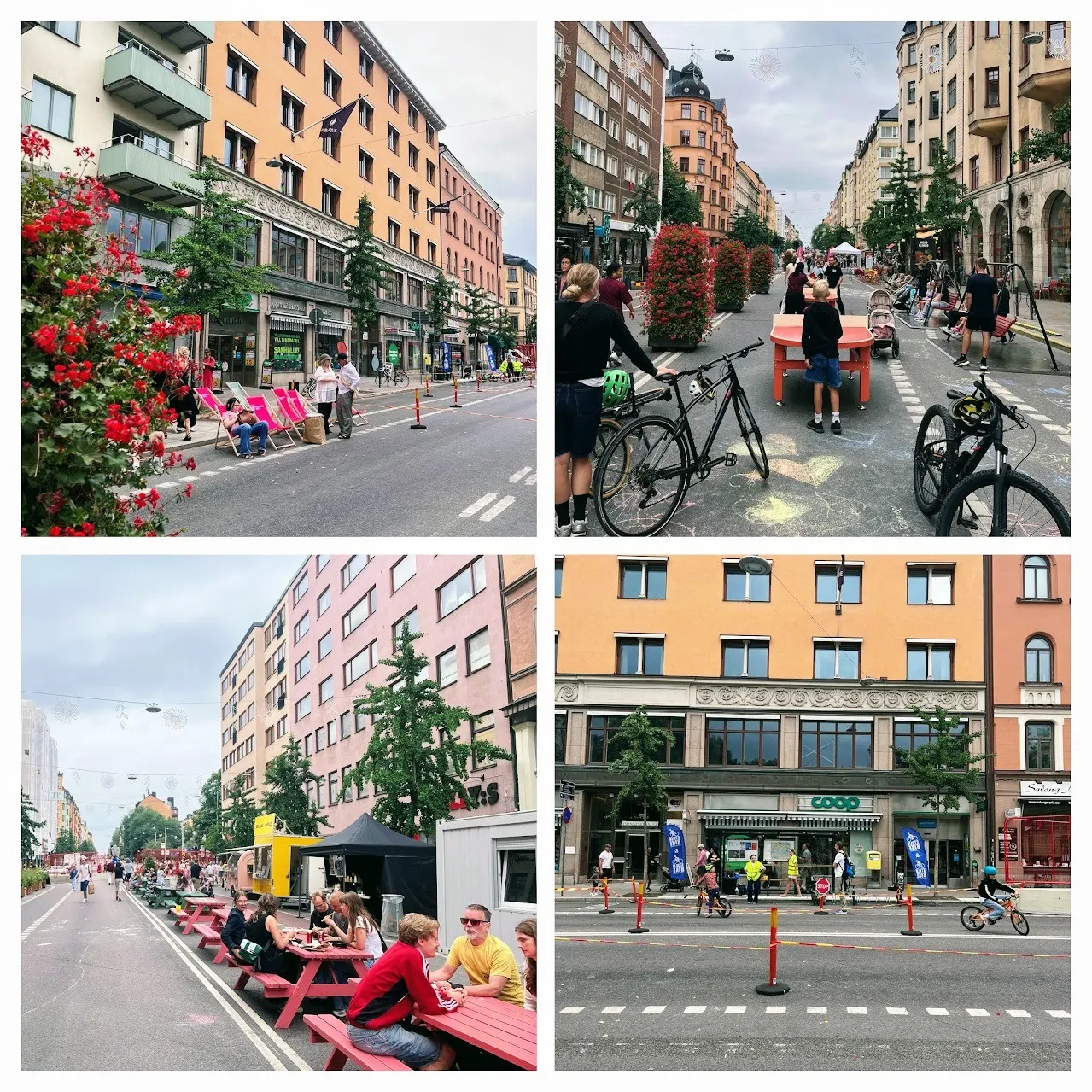
We will dive a bit deeper in a post about Hornsgatan.
#5: Rörstrandsgatan – The OG
Stats: 12,000 daily visitors⁷, 40% more employment⁴, and 97–100% of people feel safe during the day.⁹
Why it’s great: The pioneer of sommargågator (since 2016!), with a lively mix of cafés, restaurants, and local shops.
But: Still too much traffic, and not enough bike parking.
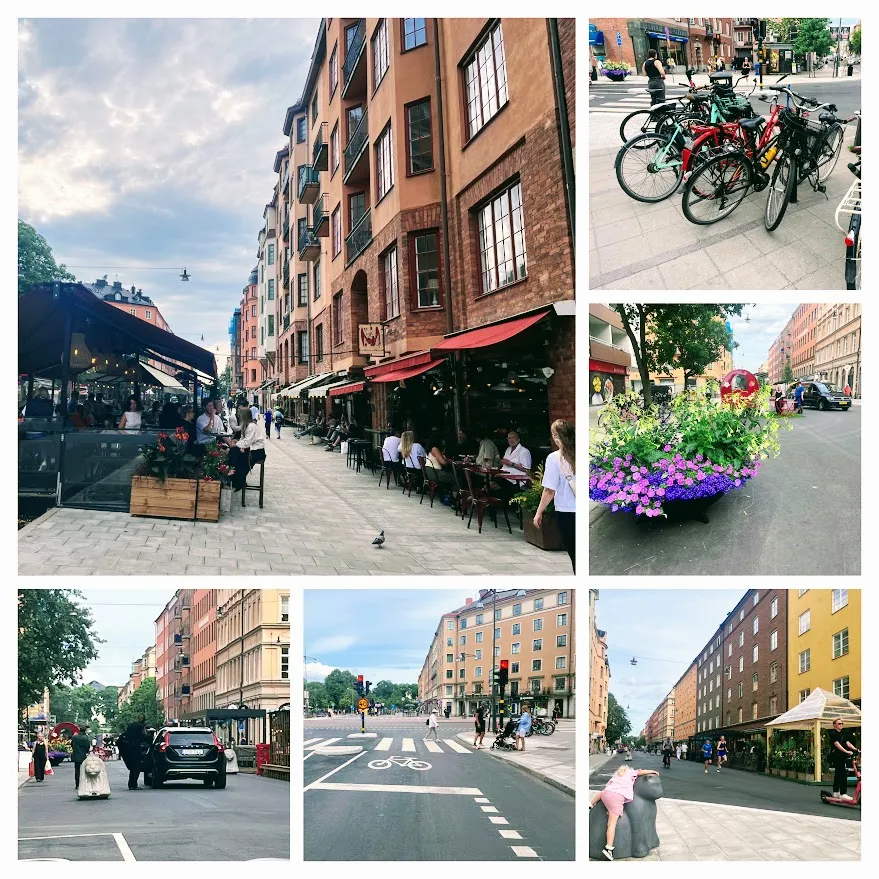
In a post on Rörstrandsgatan, we will look more closely.
#4: Swedenborgsgatan – The Economic Powerhouse With a Twist
Stats: 60% more restaurants, 40% more jobs, and 77% of businesses are now restaurants. 88% of locals rate it as “very good,” and 97% feel safe during the day.⁴
But here’s the twist: Small businesses are drowning in bureaucracy. We’ll take a closer look at this topic soon. I think you’ll find it really interesting.
Verdict: A success for pedestrians, a nightmare for small businesses.
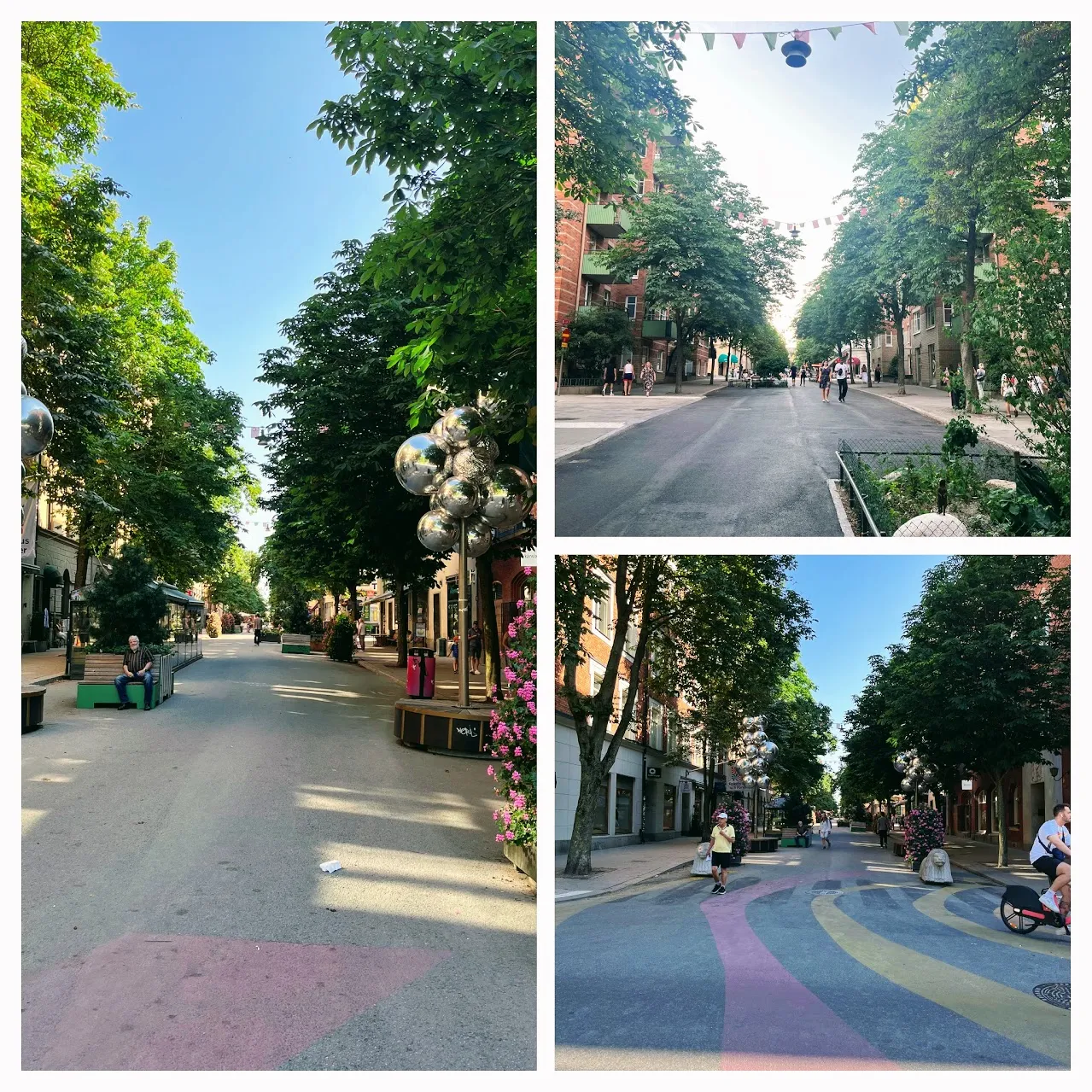
#3: Bergsunds Strand – The Waterfront Gem
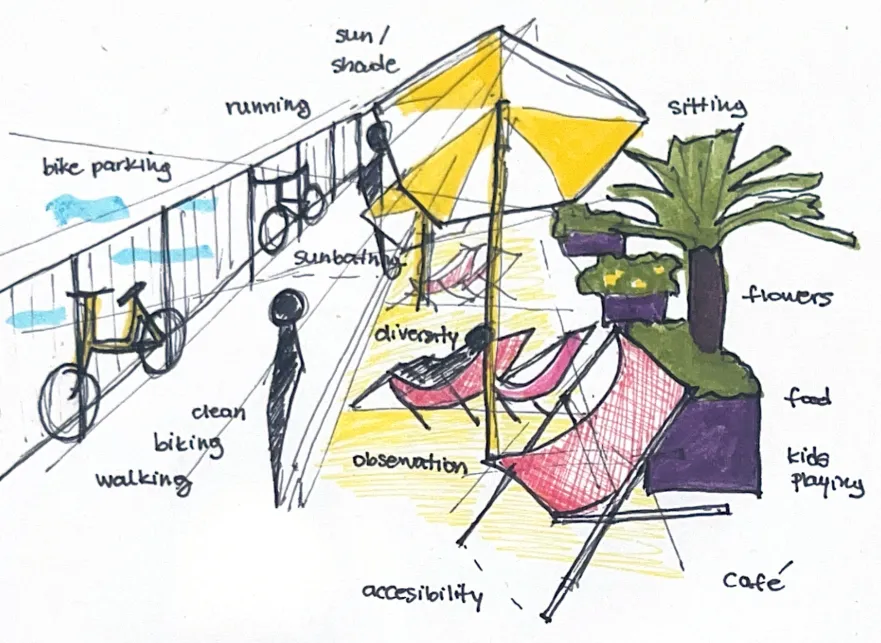
A logical extension of Hornstull Strand, packed with cafés and restaurants even on gloomy days. Car-free, bike-friendly, and accessible. Bonus: Cool beach chairs added this year. A new pier is coming soon, turning this into a long green promenade.⁵
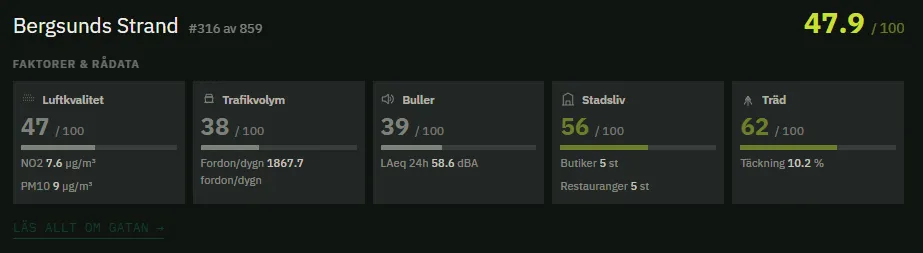
Statistics from Gatuligan
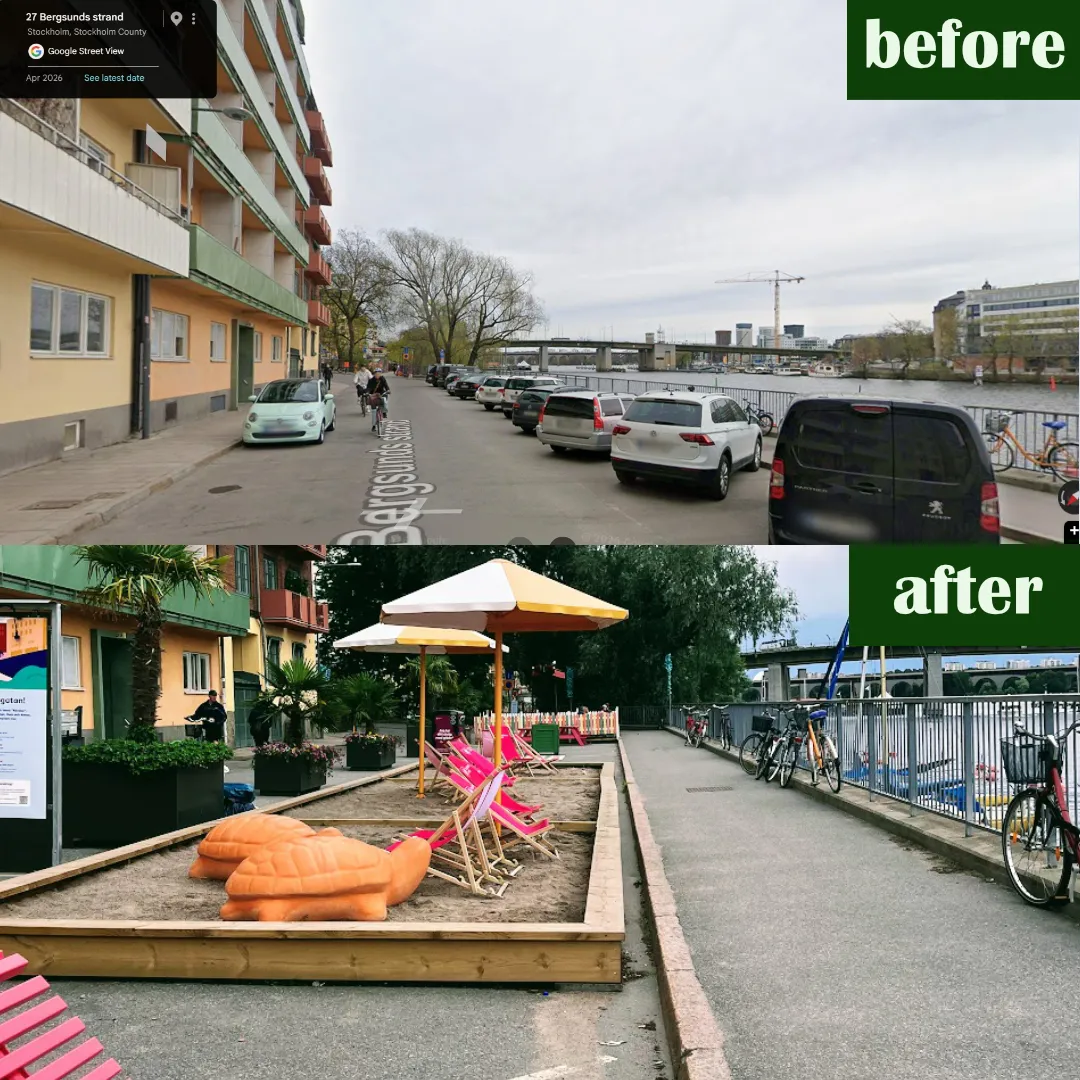
Before and after of Bergsunds strand
#2: Nytorget Area (Skånegatan) – The People’s Favorite
Stats: 40% more foot traffic, 50% longer visits, and 100% of survey respondents say it’s a place where people want to hang out.⁴
Why it works: A multi-block pedestrian network with benches, social zones, a drinking fountain, and a public toilet.
Downside: Noise from bars and parking issues.
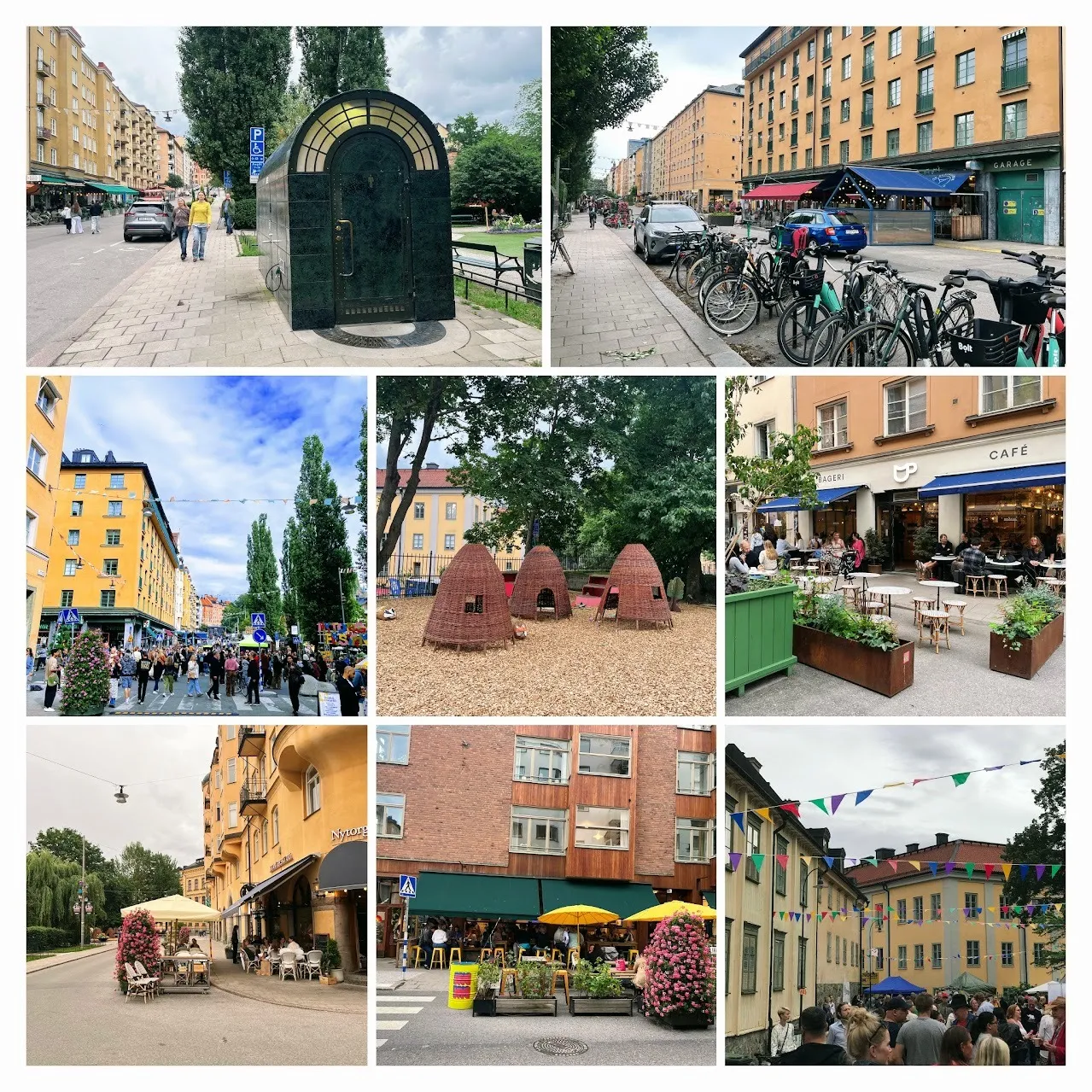
We will deep-dive into Skånegatan and the surrounding area!
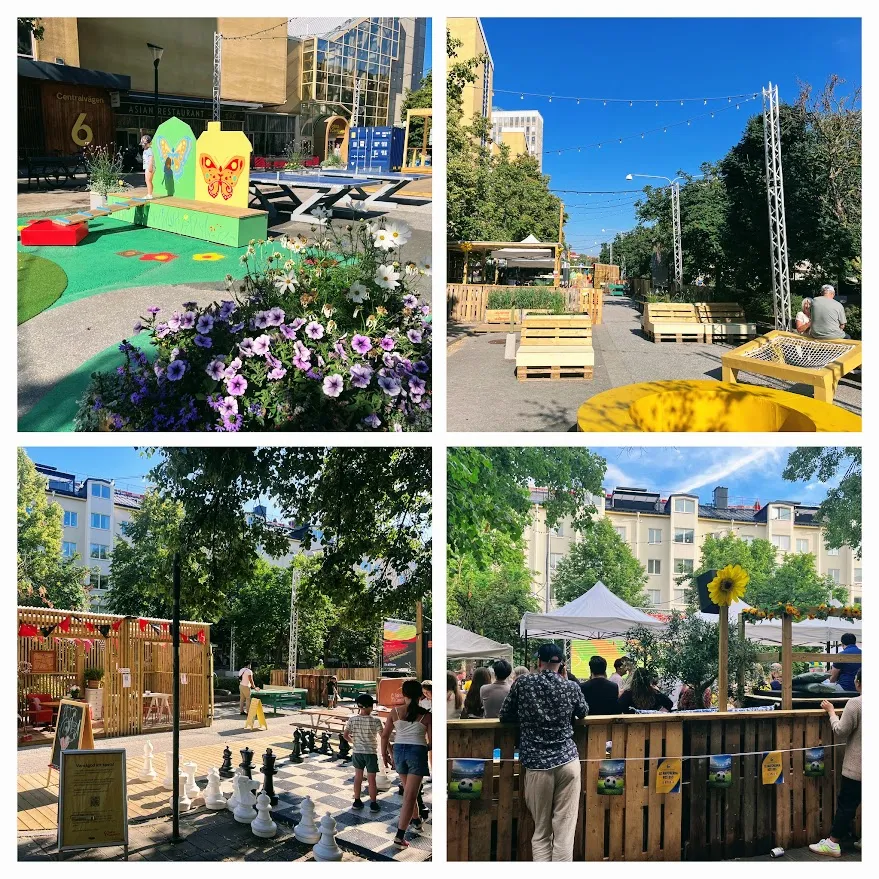
#1: Centralvägen (Solna) – The Suburban Game-Changer
Why it wins: The only street on this list that fully closes one lane to traffic, creating a true pedestrian paradise. Ping-pong tables, outdoor dining, and World Cup screenings drew crowds so big that Lilly’s Bistro’s owner calls them “completely insane” (in the best way).¹² Solna shows how it’s done; collaboration between the city and businesses makes this a community hub.
Standout feature: Events for all ages, and actual toilets (a rarity in Stockholm, apparently).
The Big Picture: What Makes a Great Summer Street?
From Centralvägen’s suburban success to Swedenborgsgatan’s economic boom (and bureaucratic nightmare), these streets show that pedestrian-first design works, if the rules support it.
The best streets have:
- More seating, greenery, and activities (people want to stay).
- Fewer cars, slower traffic (safety = more visitors).
- Strong community engagement (events, markets, and local business support).
Which of these streets have you visited? Which one surprised you the most?
Bibliography
- Admin (2024) Cyclists and Pedestrians Contribute Significantly to City Centre Spending, DCE. Available at: https://dutchcycling.nl/knowledge/blogs-by-experts/cyclists-and-pedestrians-contribute-significantly-to-city-centre-spending/ (Accessed: 27 July 2026).
- Debattredaktionen (2026) Låt fakta och inte magkänsla styra stadsutvecklingen, Dagens industri. Available at: https://www.di.se/debatt/lat-fakta-och-inte-magkansla-styra-stadsutvecklingen/ (Accessed: 27 July 2026).
- The Power of 10+ (no date) Project for Public Spaces. Available at: https://www.pps.org/article/the-power-of-10 (Accessed: 27 July 2026).
- Gatupotential (2025–2026) Spacescape. Available at: https://www.spacescape.se/project/gatupotential/ (Accessed: 27 July 2026).
- Ny bryggpromenad och upprustad strandpark på Bergsunds strand (2026) Stockholms stad. Available at: https://vaxer.stockholm/projekt/sodermalm/bryggpromenad-och-upprustad-strandpark-pa-bergsunds-strand/ (Accessed: 28 July 2026).
- Munkbrohamnen, Visit Stockholm. Available at: https://www.visitstockholm.se/o/munkbrohamnen/ (Accessed: 28 July 2026).
- Miljöpartiet Stockholms Stad on Instagram: “Sommargågatan Rörstrandsgatan är ett av Stockholms livligaste stråk som 12 000 personer passerar varje dag.” (2025) Instagram. (Accessed: 28 July 2026).
- Rörstrandsgatan blir gågata året om (2026) Stockholms stad. Available at: https://vaxer.stockholm/projekt/vasastan/rorstrandsgatan-blir-gagata-aret-om/ (Accessed: 28 July 2026).
- Levande Stockholm 2018 - Resultatrapport. Available at: https://insynsverige.se/documentHandler.ashx?did=1957125 (Accessed: 28 July 2026).
- En del av Hornsgatan blir gågata året om (2026) Stockholms stad. Available at: https://vaxer.stockholm/projekt/sodermalm/en-del-av-hornsgatan-blir-gagata-aret-om/ (Accessed: 28 July 2026).
- Sommargågata (2026) Solna stad. Available at: https://www.solna.se/uppleva—gora/sommar-i-solna/sommargagata (Accessed: 28 July 2026).
- Trots utslaget Sverige – här fortsätter VM-festen (2026) Mitt i. Available at: https://www.mitti.se/nyheter/trots-utslaget-sverige—har-fortsatter-vmfesten-6.3.374110.4c14442557 (Accessed: 28 July 2026).
Read next
Stockholm's Summer Streets 2026: The Best and the Rest
Each summer, Stockholm gives up its car-oriented, grey and depressing streets and adopts a new image: a people-friendly city.
5 min readCar-free: before and after
Drag the slider and see how a street in Stockholm can be transformed when the cars disappear.
4 min readThe Dark Side of Data and Conclusion
The last part of the summer street series takes a critical look at the Gatupotential report's numbers, with Malmskillnadsgatan as the oddball, and sums up what makes a summer street work. A guest post by Irena Toljan on overhyped data with holes.
9 min read